

 Currently viewing - English
In the UK, all bats and their roosts are protected under the Wildlife & Countryside Act of 1981 and the Conservation (Natural Habitats,etc.) Regulations 1994. This, amongst other protective laws, makes it an offence to disturb bats when they are roosting and obstruct, damage or destroy the places where bats live (this applies even if the bats are not in residence). Violation can lead to unlimited fines or up to 6 months imprisonment.
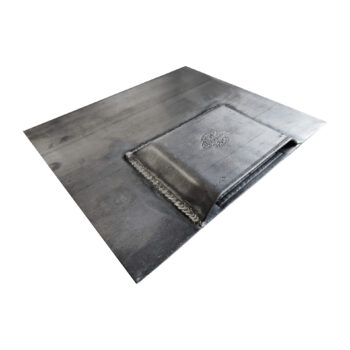
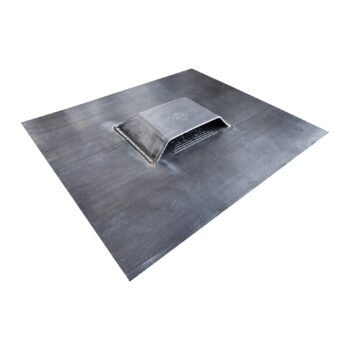
A bat access tile or vent allows bats safe passage through a roof to help them into roosting areas in lofts and roof voids whilst maintaining the watertight integrity of the roof. This technology is approved by ecological experts as a safe and lawful way to allow bats access to their roosts.
Bats and people have been sharing dwellings for thousands of years. Modern building techniques and a change in land use have made bat roosting sites scarce, endangering the survival of many species. As a result artificial roost sites such as bridges, barns, roof voids have become essential for bat survival. Bat conservation and eco-surveys are often a condition of planning to protect bats and their habitats before planning permission is granted.
Architects and builders all over the UK use our lead bat access tiles, the sleek design has minimal impact on the roofs aesthetics while the high quality lead material used is durable and long lasting. They are also suitable for a variety of roof pitches.
Leadworx fabricates a range of lead flashing products made using 100% recyclable Code 4 sheet lead milled to British Standard BS EN 12588.
If you find bats in your roof in the UK, it’s important to know that bats are a protected species, so they must not be harmed or disturbed.
First, avoid direct contact and do not attempt to remove the bats yourself. Instead, contact the Bat Conservation Trust (BCT) or a licensed bat worker, who can advise you on appropriate actions.
You can also reach out to Natural England, Natural Resources Wales, or Scottish Natural Heritage, depending on your location. These organisations can guide you through the process of safely managing bats in your property and ensure any actions comply with the law.
LEADWORX TOOLS
Calculate from measurements, or estimate the angle from a photograph.
Measure the vertical rise and horizontal run between the same two points.
Use the same unit for both, such as mm or cm. Run is not the sloping roof length or automatically the full building width.
Enter your measurements to begin.
Enter measurements first.
These formats describe the same slope; they are not product size recommendations.
Use a square-on view of the roof profile, with a known horizontal reference in the same plane.
The photo box opens your camera on supported phones and tablets. On a computer, choose a photo file or drop one into the box.
Processed on your device by this tool. JPG, PNG or WebP, up to 20 MB and 24 megapixels. Export HEIC as JPG first.
Tap the photo box or choose a saved photo.
Tap four points: two on the roof slope, then two on a level reference. Drag points to adjust. Use long lines for a better estimate.
Focus the photo. Arrow keys move the marker; Shift moves 10 pixels. Enter adds a point. Select a placed point below to adjust it with the arrows. Escape returns to the free marker.
No points placed.
Mark the photo first.
The reference line corrects camera tilt, not perspective or lens distortion. A photo cannot guarantee the angle needed for manufacture.
Check the pitch before ordering made-to-measure leadwork. Measure only from a safe, accessible position.
 Switch to Ireland