


 Switch to Ireland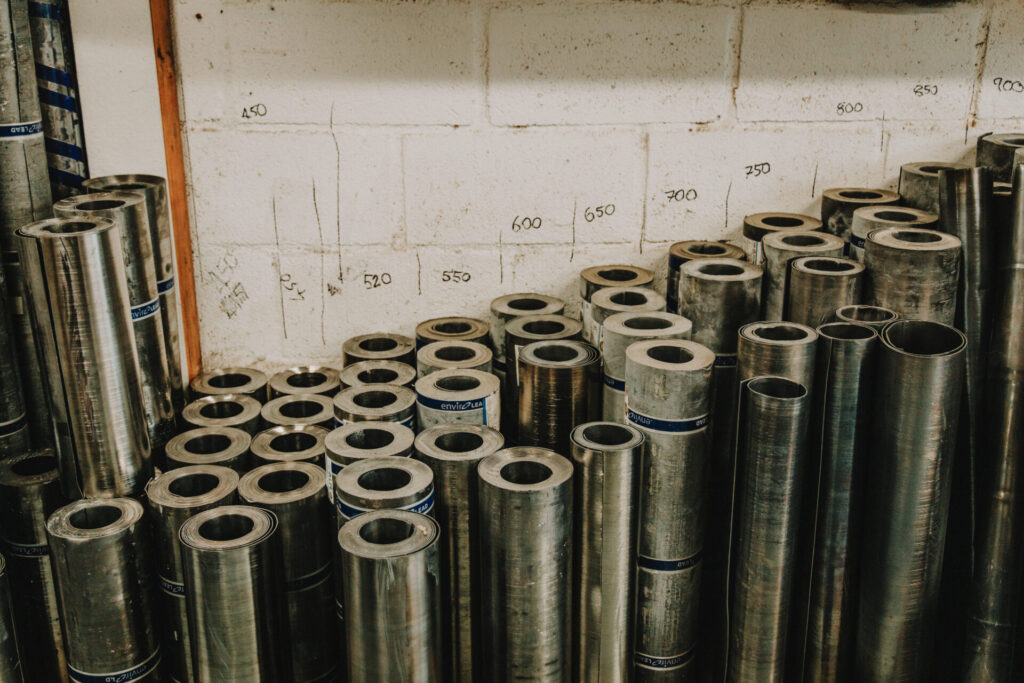
There are many different types of lead, because sheet lead metal comes in several forms. Because processing methods differ, so do their structure. Variations arise in both makeup and performance. Some types contain trace elements that subtly alter durability.
Here’s a clear breakdown:
Milled/Rolled Lead Sheet
Heavy rollers press pure lead blocks into flat sheets, shaping what builders often call milled lead. This form appears across modern construction sites due to its strength and reliability. Known just as well as rolled lead sheet, it holds up well under tough conditions.
The method ensures uniform thickness, meeting strict standards set by BS EN 12588. Precision matters here – each pass through the machinery refines the material further.
Key points:
- The most common commercial form of lead
- Produced by rolling lead into uniform sheets
- Stronger and more consistent than cast lead
- Available in various codes (thicknesses)
Sand Cast Lead
Sand casting is a more traditional handcrafted lead sheet that uses compacted sand shaped into a mould. Molten lead is poured into the sand mould and allowed to cool. Once cooled, workers extract the metal, revealing a product with subtle irregularities. These slight variations result in heavier sheets, valued especially where authenticity matters most. Often found in restoration work, such material blends well with older heritage buildings.
Key points:
- Produces thicker, imperfect sheets
- Durability
- Surface is usually rougher and less uniform than rolled lead
- Can be made into custom shapes, not just flat sheets
- Historic authenticity
Machine Cast Lead
Spinning a chilled drum through liquid lead creates this product. Lead solidifies on the surface as the drum turns. Once firm the sheet peels off, coiling automatically. This is lead that has been shaped into form using a mechanical process rather than being poured by hand. The surface stays smooth and free from grease or residue.
Key points:
- Thickness can be controlled
- More cost effective
Shop our range of products here
