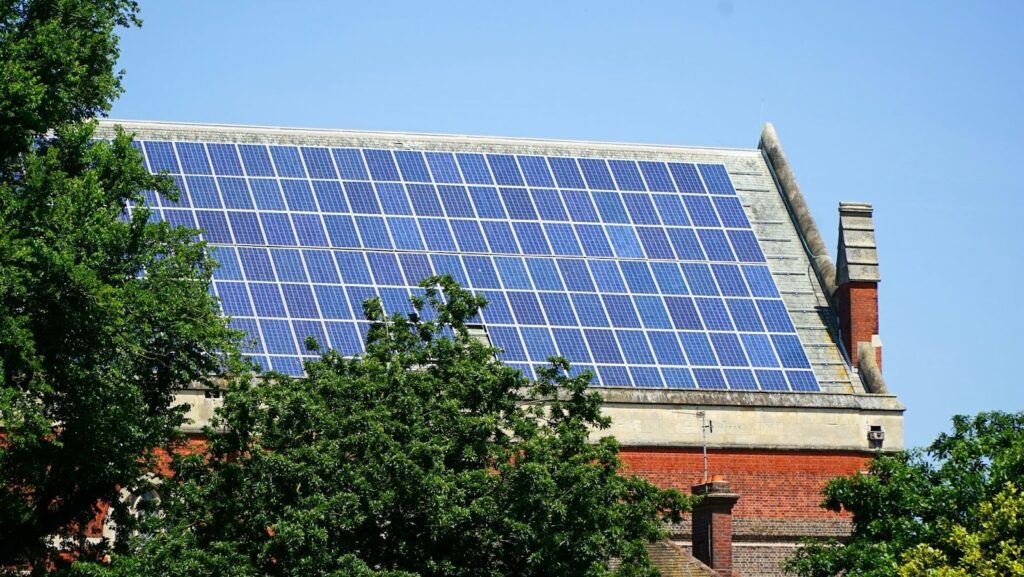
If you own a property with a lead roof, you’ve probably asked yourself this question when considering solar panels. It’s an excellent question, and one that requires careful consideration. Lead roofing is a premium material chosen for its exceptional longevity and weatherproofing qualities, particularly on heritage buildings, period properties, and complex roof structures throughout the South West and across the UK.
The encouraging news? Yes, solar panels can absolutely be installed on lead roofs. However, the approach differs significantly from standard tile or slate installations, and understanding these differences is crucial for protecting both your valuable roof and your solar investment.
Lead has been the roofing material of choice for centuries, particularly on churches, listed buildings, and high-value properties. Its unique properties, malleability, durability, and exceptional weather resistance, make it ideal for complex roof geometries, but these same characteristics present specific challenges for solar installations.
Lead roofing differs from conventional materials in several important ways:
Temperature Sensitivity: Lead expands and contracts considerably with temperature changes. On a sunny day, your lead roof surface can reach temperatures that cause significant thermal movement. This natural behaviour must be accommodated in any solar installation design.
Weight Considerations: Lead is substantially heavier than most roofing materials, typically weighing around 25kg per square metre depending on the code (thickness) used. Adding solar panels increases the overall roof load, which requires careful structural assessment.
Surface Integrity: Unlike tiled roofs where individual tiles can be temporarily removed, lead roofing relies on continuous waterproof coverage. Any penetration of the lead surface creates a potential point of water ingress that must be expertly managed.
Heritage Considerations: Many lead roofs are found on listed buildings or properties within conservation areas. These locations face additional regulatory requirements that standard installations don’t encounter.
Conventional solar installations on pitched roofs typically involve fixing mounting brackets directly through the roofing material into the underlying structure. On a lead roof, this approach presents several significant concerns:
Waterproofing Challenges: Every penetration through lead creates a potential leak point. Whilst proper flashing techniques can seal these points, the lead’s thermal movement can stress sealed joints over time.
Structural Complexity: The underlying structure beneath lead roofing can vary considerably. Some lead roofs sit on timber boarding, others on concrete decking. Each requires different fixing approaches.
Long-term Maintenance: Fixings that penetrate lead roofing can become maintenance points over the 25-40 year lifespan of your solar system. The lead around fixings may require periodic inspection and maintenance.
The contemporary answer to solar installation on lead roofs is the ballasted mounting system, an innovative approach that eliminates the need for roof penetrations entirely.
Ballasted mounting systems use carefully calculated weight to secure solar panels without drilling or fixing through the roof surface. Here’s what makes them effective:
Weight Distribution: The system distributes weight evenly across the roof surface using a combination of the mounting frame and ballast materials (typically concrete blocks, gravel trays, or purpose-built ballast containers).
Wind Resistance: Modern ballasted systems are engineered using wind tunnel testing to ensure they can withstand the UK’s weather conditions. The aerodynamic design of the mounting frames actually uses wind pressure to help keep the array stable.
Optimal Tilt: Unlike pitched roofs where panels must follow the existing angle, ballasted systems on flat or low-pitch lead roofs allow you to set the ideal tilt angle (typically 10-20 degrees for UK installations) to maximise solar generation throughout the year.
Roof Protection: By avoiding penetrations, ballasted systems actually protect your lead roof’s integrity whilst allowing you to benefit from solar energy.
Whilst ballasted systems offer an excellent solution, there are factors to consider:
Weight Loading: The combined weight of panels, mounting frames, and ballast can be substantial, often adding 80-120kg per panel to your roof load. A structural engineer’s assessment is essential to verify your building can safely support this additional weight.
Space Requirements: Ballasted systems typically require panels to be positioned at least 1 metre from roof edges to meet building regulations and ensure system stability. This may reduce the number of panels you can install compared to a penetrating system.
Planning Considerations: Recent regulatory changes now permit solar panels to project up to 600mm above a flat roof surface without planning permission (up from 200mm previously). However, if your building is listed or in a conservation area, different rules apply.
If your lead roof is on a listed building or within a conservation area, the installation process becomes more complex but is certainly not impossible.
Listed buildings require Listed Building Consent for most external alterations, including solar installations. This process involves:
Heritage Impact Assessment: You’ll need to demonstrate how the installation will affect the building’s historic character and significance.
Conservation Officer Consultation: The local authority’s conservation officer will assess whether the proposed installation is appropriate for the building.
Sensitive Design: For heritage buildings, installers may need to position panels on less visible roof areas or specify panels that better complement the building’s character.
Many successful solar installations have been completed on heritage properties by:
Not all solar installers have experience with lead roofing or ballasted systems. When selecting an installer for your lead roof solar project, look for:
The Microgeneration Certification Scheme (MCS) is the UK’s quality mark for renewable energy installations. MCS-certified installers must meet rigorous standards for technical competence and customer protection. Crucially, MCS certification is required if you want to access Smart Export Guarantee (SEG) tariffs that pay you for excess electricity exported to the grid.
Understanding what to expect during installation helps ensure a smooth process:
Your installer will conduct a thorough site survey, taking measurements, photographs, and assessing roof access. If you have a heritage property, this stage may include discussions with conservation officers.
A structural engineer will review your building’s load-bearing capacity and provide calculations confirming the roof can safely support the solar installation. For older buildings, this may involve accessing loft spaces to inspect roof timbers and structure.
Your installer will finalise the system design and handle any necessary approvals. For standard installations, this is typically quick. Listed buildings or conservation areas may require 8 weeks or more for planning approvals.
The actual installation on a lead roof using ballasted systems is often faster than traditional pitched roof installations, as no roof penetrations are required. The installer will:
Your installer should provide you with all certification documents, including your MCS certificate (essential for export tariffs), electrical installation certificates, and structural calculation reports.
A well-designed solar installation on a lead roof can perform excellently:
Optimal Angles: Ballasted systems allow you to set the ideal tilt angle regardless of your roof’s natural pitch, potentially improving energy generation compared to following a roof slope that isn’t optimally oriented.
Cooling Benefits: The gap beneath panels in a ballasted system allows excellent air circulation, helping panels run cooler and more efficiently.
Roof Protection: By avoiding penetrations, you eliminate potential leak points whilst the panels themselves can provide some protection to the lead surface from UV exposure and weathering.
Long-term Returns: Solar panels typically generate a return on investment within 8-12 years through electricity savings and export income, then continue producing free electricity for another 15-30 years.
Solar panels on lead roofs require minimal maintenance:
Panel Cleaning: Rain naturally cleans panels on tilted systems. Occasional cleaning (every 1-2 years) may improve output slightly.
Visual Inspections: Annual visual checks ensure ballast remains properly positioned and panels remain secure.
Roof Condition: Regular inspection of your lead roof should continue as normal. The absence of penetrations means your existing roof maintenance schedule remains unchanged.
System Monitoring: Most modern solar systems include monitoring apps that alert you to any performance issues, making problems easy to identify quickly.
The result? A professional solar installation that respects your valuable lead roof whilst delivering decades of clean, renewable energy and substantial cost savings.
This article provides general guidance about solar installations on lead roofs. Every property is unique, and we recommend professional assessment of your specific situation before making any decisions. All installations should be carried out by qualified, MCS-certified professionals to ensure safety, performance, and access to export tariffs.



